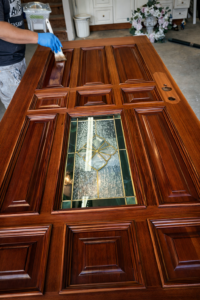
When it comes to protecting and enhancing wood, homeowners often ask the same question: Should I use varnish or stain?
Both products play an important role in preserving wood surfaces, but they serve different purposes. Choosing the right one can make a big difference in durability, appearance, and long-term performance.
In this post, we break down the differences, benefits, and best uses of varnish vs. stains to help you make the right decision for your home or project.
What Is Varnish?
Varnish is a clear, hard protective coating applied over wood.
It doesn’t change the colour of the wood—its main purpose is to seal, protect, and add sheen.
Key Features of Varnish
- ✔ High durability – Creates a hard barrier against scratches, water, and UV rays.
- ✔ Enhances natural grain – Highlights the wood without altering its colour.
- ✔ Available in various sheens – Gloss, semi-gloss, satin, or matte.
- ✔ Ideal for high-traffic or moisture-prone areas – Perfect for floors, railings, outdoor furniture, and decks (depending on the formulation).
When to Choose Varnish
- You want maximum protection and longevity.
- You prefer a natural wood look without changing colour.
- You need something tough enough for heavy wear.
What Is Wood Stain?
Stain penetrates the wood to add colour while still allowing the grain to show through.
It doesn’t provide much protection on its own—stain usually needs a sealer or varnish on top.
Key Features of Stain
- ✔ Adds colour – From light natural tones to deep rich shades.
- ✔ Soaks into the wood for a natural, textured finish.
- ✔ Great for customization – Lets you match décor or create contrast.
- ✔ Requires a topcoat—stain alone does not protect the wood.
When to Choose Stain
- You want to change or enhance the colour of the wood.
- You prefer a warm, rich, custom look.
- You are okay with adding a protective topcoat afterward.
Varnish vs. Stain: What’s the Difference?
| Feature | Varnish | Stain |
| Purpose | Protection + sheen | Colour enhancement |
| Appearance | Clear or tinted, glossy or matte | Coloured, natural grain visible |
| Protection Level | High | Low (needs topcoat) |
| Absorption | Stays on top of wood | Penetrates into wood |
| Best For | Floors, railings, furniture, outdoor wood | Cabinets, trim, décor, interior accents |
Can You Use Both Together?
Absolutely.
A common and highly effective system is:
- Apply stain → for colour
- Apply varnish → for protection
This gives you the best of both worlds: beautiful colour AND long-lasting durability.
Which One Should You Choose?
Choose Varnish if:
- You need durability and resistance to moisture.
- You want to protect natural wood tones.
- You’re finishing high-use surfaces like floors, railings, or exterior wood.
Choose Stain if:
- You want to customize the colour.
- You’re working on cabinets, trim, furniture, or decorative pieces.
- You’re okay with adding a protective coat after.
Final Thoughts
Both varnish and stain are excellent products—your choice depends on the look and performance you need.
At Casanova Painting, we help homeowners choose the right finishing system to beautify and protect their wood surfaces for years to come. Whether it’s interior trim, exterior wood features, or full refinishing projects, our team delivers high-end finishes with care and precision.
If you wish to discuss this further, remember we are only a phone call or text away at 7788782008